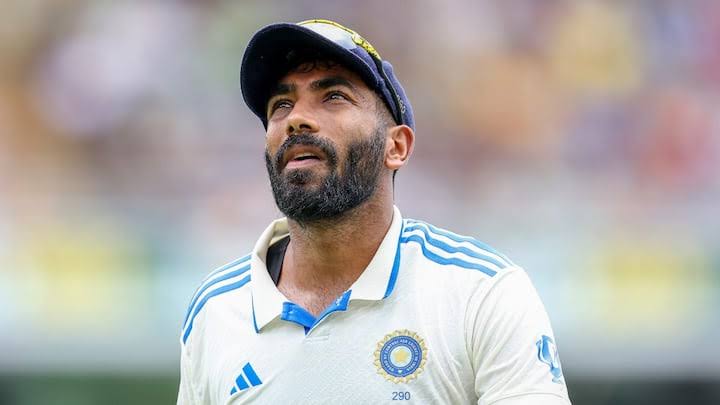
Former Indian opener Abhinav Mukund reckoned that the Indian T20I side shouldn’t solely depend on their ace pacer Jasprit Bumrah to deliver, adding that the team requires more experience in their set-up, keeping the ICC T20 World Cup 2028 in mind.
Speaking on Cricinfo, Mukund backed the discarded Indian pacer Bhuvneshwar Kumar’s comeback to the T20I set-up, highlighting the need to have more experienced pacers in the Indian T20I team.
“You can’t just keep relying on Bumrah. I think the selectors stand in a place where they are thinking, okay, Bumrah is very good if we have to play him for Test match cricket and ODI cricket and T20 cricket. But you’re looking at someone to partner Arshdeep. So, Arshdeep’s primary role with Bumrah is for him to take the first over, which was his strength all this while. He’s had a lot of experience. They’ve groomed him along with Bumrah,” Mukund said.
“You’ve got Bhuvneshwar Kumar who’s back into the mix. When you have two or three inexperienced guys in a lineup, unfortunately for a captain who’s in his first year as a full international captain, it makes things hard. 2028 World Cup is in the first half. So, you definitely need to think of where you’re going with the squad balance and I think bringing Bhuvi back was the right call,” he added.
In Jasprit Bumrah’s absence, Prince Yadav and Mayank Yadav both featured in India’s playing XI during the T20I series against the West Indies. Comparing the two pacers, Mukund felt that Prince was more developed as a bowler, while Mayank remained relatively raw. Mayank claimed four wickets in four matches, whereas Prince managed one wicket in three outings at an economy rate of 9.12.
“Prince is slightly more developed. He has the ability to bowl with the new ball. He’s got the ability to bowl with the old ball, can do the reverse swing, can get better at bowling slower balls. Mayank is a raw pace. So, there is so much scope for development. Mayank needs to work on his slower ball; he needs to work on his yorkers. But all of this can be worked on and that’s where I think patience is very important,” he concluded.